English
Press release
0
Secondary theme
Artificial intelligence and big data

EU Charter of Fundamental Rights
Highlights
-
 Report / Paper / Summary18November2021This report examines the EU’s main criminal law instrument in the field of counter-terrorism, Directive (EU) 2017/541. Specifically, it considers how the directive engages issues of fundamental rights, affecting individuals, groups and society as a whole.
 -
 Report / Paper / Summary11October2021This report proposes a framework for becoming, and functioning as, a ‘human rights city’ in the EU. It includes ‘foundations’, ‘structures’ and ‘tools’ for mayors, local administrations and grassroots organisations to reinforce fundamental rights locally. It is based on existing good practice and expert input by representatives of human rights cities in the EU, academic experts, international organisations and city networks.
 -
 Handbook / Guide / Manual22June2016Access to justice is an important element of the rule of law. It enables individuals to protect themselves against infringements of their rights, to remedy civil wrongs, to hold executive power accountable and to defend themselves in criminal proceedings. This handbook summarises the key European legal principles in the area of access to justice, focusing on civil and criminal law.
 -
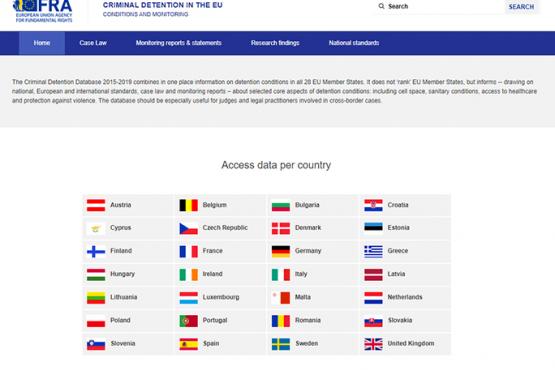 PageThe Criminal Detention Database 2015-2022 combines in one place information on detention conditions in all 27 EU Member States as well as the United Kingdom.
Highlights
-
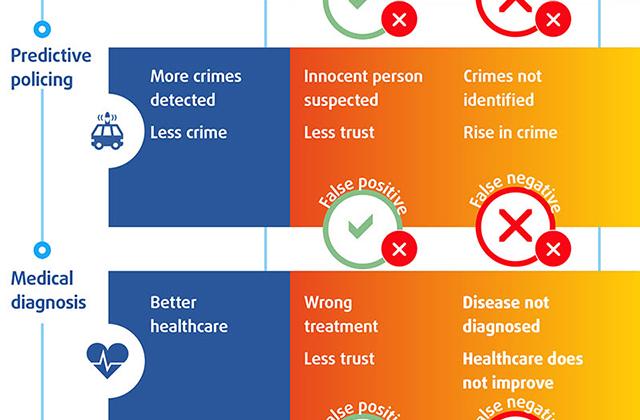
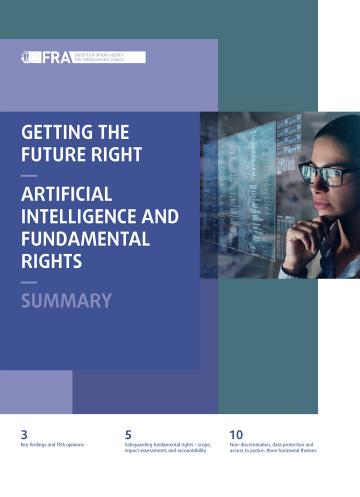
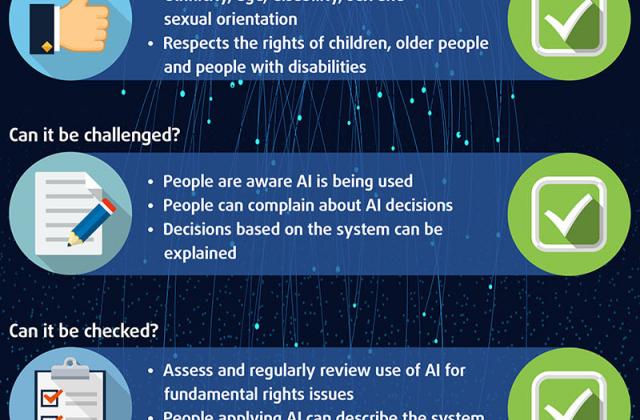
 Report / Paper / Summary14December2020Artificial intelligence (AI) already plays a role in deciding what unemployment benefits someone gets, where a burglary is likely to take place, whether someone is at risk of cancer, or who sees that catchy advertisement for low mortgage rates. Its use keeps growing, presenting seemingly endless possibilities. But we need to make sure to fully uphold fundamental rights standards when using AI. This report presents concrete examples of how companies and public administrations in the EU are using, or trying to use, AI. It focuses on four core areas – social benefits, predictive policing, health services and targeted advertising.
 -
 VideoIn the latest edition of his video blog, FRA Director Michael O’Flaherty speaks about the human rights challenges, but also the opportunities, that come along with the development of artificial intelligence technology.
 -
 Report / Paper / Summary30May2018We live in a world of big data, where technological developments in the area of machine learning and artificial intelligence have changed the way we live. Decisions and processes concerning everyday life are increasingly automated, based on data. This affects fundamental rights in various ways. This focus paper specifically deals with discrimination, a fundamental rights area particularly affected by technological developments.
 -
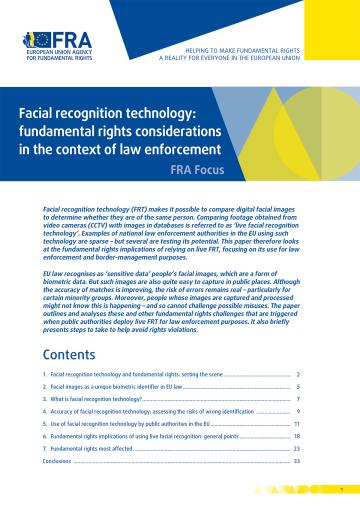
 PageAs part of the background research for the Agency’s project on ‘Artificial intelligence (AI), Big Data and Fundamental Rights’, FRA has collected information on AI-related policy initiatives in EU Member States and beyond in the period 2016-2020. The collection currently includes about 350 initiatives.
Products













Multimedia
News
Events
Primary theme
Data protection, privacy and new technologies
More of our everyday lives are online — both at work and home. Meanwhile, terror attacks intensify calls for more surveillance. Concerns grow over the safety of our privacy and personal data.
FRA helps lawmakers and practitioners protect your rights in a connected world.
EU Charter of Fundamental Rights
Highlights
-
Report / Paper / Summary18November2021This report examines the EU’s main criminal law instrument in the field of counter-terrorism, Directive (EU) 2017/541. Specifically, it considers how the directive engages issues of fundamental rights, affecting individuals, groups and society as a whole.
-
Report / Paper / Summary11October2021This report proposes a framework for becoming, and functioning as, a ‘human rights city’ in the EU. It includes ‘foundations’, ‘structures’ and ‘tools’ for mayors, local administrations and grassroots organisations to reinforce fundamental rights locally. It is based on existing good practice and expert input by representatives of human rights cities in the EU, academic experts, international organisations and city networks.
-
Handbook / Guide / Manual22June2016Access to justice is an important element of the rule of law. It enables individuals to protect themselves against infringements of their rights, to remedy civil wrongs, to hold executive power accountable and to defend themselves in criminal proceedings. This handbook summarises the key European legal principles in the area of access to justice, focusing on civil and criminal law.
-
PageThe Criminal Detention Database 2015-2022 combines in one place information on detention conditions in all 27 EU Member States as well as the United Kingdom.
Highlights
-
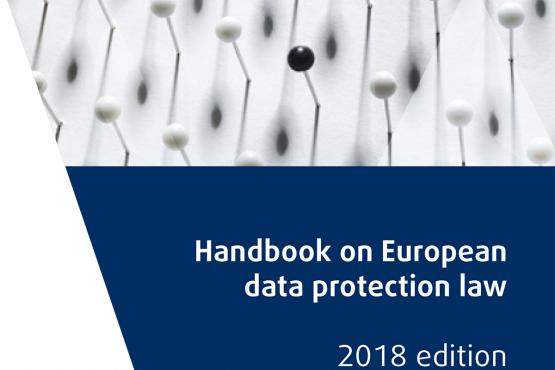 Handbook / Guide / Manual25May2018The rapid development of information technology has exacerbated the need for robust personal data protection, the right to which is safeguarded by both European Union (EU) and Council of Europe (CoE) instruments. Safeguarding this important right entails new and significant challenges as technological advances expand the frontiers of areas such as surveillance, communication interception and data storage. This handbook is designed to familiarise legal practitioners not specialised in data protection with this emerging area of the law.
 -
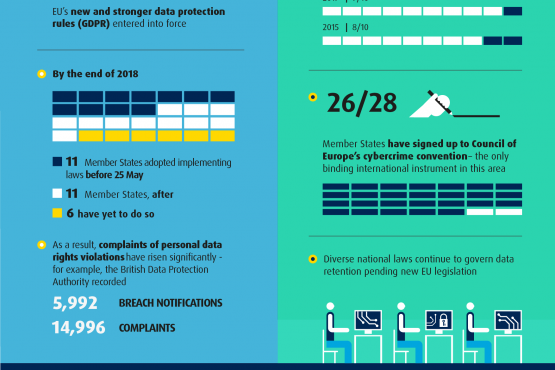 InfographicFundamental Rights Report 2019: 2018 was a landmark year for data protection. New EU rules took effect and complaints of breaches increased significantly.
 -
 VideoThis video blog by FRA Director Michael O’Flaherty is released periodically and will address burning fundamental rights themes.
Products






Multimedia
News
Events
Summary
FRA held an online information session on 22 January for national authorities on the findings of the FRA report Assessing High-risk Artificial Intelligence: Fundamental Rights Risks.
See also
Published At
2026-01-23T09:19:00
Show in News list
Yes
Archive
No