The child rights handbook now in 12 additional languages

5 March 2026


English
Press release
0
Secondary theme
Equality

Children, youth and older people

Highlights

  • Report / Paper / Summary
    18
    November
    2021
    This report examines the EU’s main criminal law instrument in the field of counter-terrorism, Directive (EU) 2017/541. Specifically, it considers how the directive engages issues of fundamental rights, affecting individuals, groups and society as a whole.
  • Report / Paper / Summary
    11
    October
    2021
    This report proposes a framework for becoming, and functioning as, a ‘human rights city’ in the EU. It includes ‘foundations’, ‘structures’ and ‘tools’ for mayors, local administrations and grassroots organisations to reinforce fundamental rights locally. It is based on existing good practice and expert input by representatives of human rights cities in the EU, academic experts, international organisations and city networks.
  • Handbook / Guide / Manual
    22
    June
    2016
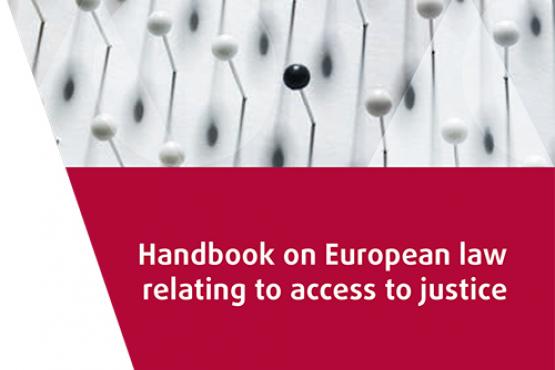
    Access to justice is an important element of the rule of law. It enables individuals to protect themselves against infringements of their rights, to remedy civil wrongs, to hold executive power accountable and to defend themselves in criminal proceedings. This handbook summarises the key European legal principles in the area of access to justice, focusing on civil and criminal law.
  • Page
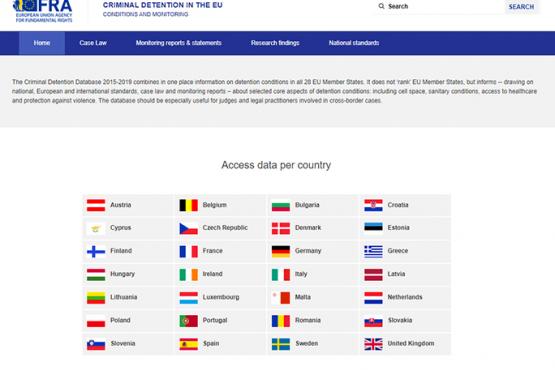
    The Criminal Detention Database 2015-2022 combines in one place information on detention conditions in all 27 EU Member States as well as the United Kingdom.

Highlights

  • Leaflet / Flyer
    20
    November
    2019
    Child rights come first. Measures to ensure child protection and participation apply to all children in the EU. This brochure guides you to relevant FRA reports and tools that can support you when promoting and protecting the rights of all children in the EU.
  • Report / Paper / Summary
    25
    April
    2018
    The right to access justice and all other relevant procedural rights are not just rights in themselves; they also protect against violations of every other right. Respect for children’s rights in the area of justice is therefore essential. International treaties, the Charter of Fundamental Rights of the European Union, European Union (EU) secondary law, and national legislation provide a number of relevant rights.
  • Page
    Each year, an estimated 2.5 million children go through legal procedures. Two-thirds of children do not receive adequate information during proceedings. Their understanding of their rights and procedures is rarely checked. The behaviour of legal professionals affects to what degree children feel safe and comfortable. These videos provide practical guidelines about how to ensure justice is child-friendly.
  • Report / Paper / Summary
    5
    February
    2015
    The European Union Agency for Fundamental Rights (FRA), at the request of the European Commission, conducted research on national child protection systems in the 28 European Union (EU) Member States. It seeks to understand how national child protection systems work and to identify common challenges and promising practices.
    Products
    20
    March
    2025
    In recent years, the EU has taken steps to improve child protection, yet some Member States do not have an integrated approach. FRA first produced an overview of child protection systems in the EU in 2014, and an update in 2023. The data is published in FRA’s ‘Mapping of Child Protection Systems in the EU – Update 2023’. This report completements the 2023 update with comparative analysis and provides greater detail on children in vulnerable situations, care and the participation of children in matters affecting them. It also offers guidance on creating comprehensive frameworks that ensure that children’s rights are respected.
    The data cover the key components of national child protection systems. This includes information on national law and policies, as well as the structures, actors, resources, functions and monitoring of national child protection systems.
    31
    January
    2024
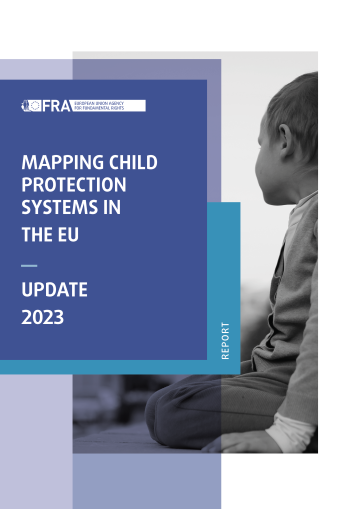
    Children’s rights exist to ensure the safety and wellbeing of every child. Improved child protection systems ensure that these rights are met. In recent years, the EU has taken significant steps to improve child protection systems. This mapping of child protection systems gives an overview of the state of such systems at national level and developments since 2015. It promotes the improvement of integrated child protection systems. It is an update of FRA’s mapping of child protection systems in 2015, based on data collected in 2023 in the 27 EU Member States. By publishing this, FRA aims to support securing the sustainable well-being, safety and rights of all children living in the EU.
    13
    September
    2023
    Europe’s ageing population is ever-increasing, and our societies are becoming more digitalised. Many public services are now available online, with many more services in the process of being digitalised. But the digitalisation of public services poses a risk of exclusion for older persons. In this new report, FRA explores the impact of digitalisation on the fundamental rights of older persons. The report maps the current legislation, policies and practices fostering digital inclusion. It provides an overview of the laws at the national level that provide for equal access to public services, both online and offline. The findings show how Member States safeguard older person’s rights to access services undergoing digitalisation. It outlines how Member States can support digital skills and ensure older people can fully participate in public life.
    1
    March
    2023
    This manual is designed to help institutions, organisations and individuals to train guardians of unaccompanied children or to deliver ‘train-the-trainers’ courses. It can be used in a range of training contexts, such as professional and academic training, on-the-job training and continuing training. The manual is based on human and fundamental rights principles and ethical standards and recognises that the child and the guardian have their own personal stories, resources and capacities. It enhances guardians’ confidence to promote the child’s rights and best interests. It also enhances their confidence to act independently and impartially in relation to different state
    officials, service providers and other community members.
    25
    October
    2022
    02 November 2022
    This report presents findings from FRA’s 2021 survey on Roma in Croatia, Czechia, Greece, Hungary, Italy, Portugal, Romania and Spain, as well as in North Macedonia and Serbia. The survey includes interviews with more than 8,400 Roma, collecting information on more than 20,000 individuals living in their households. By focusing on Roma, the survey provides unique data and information that are not available from European general population surveys, which do not disaggregate on grounds of ethnic origin. The findings present a bleak but familiar picture of exclusion, deprivation, discrimination and racism.
    Young? Passionate about human rights? Having the right data can make a world of difference for your campaigning.
    On 7 May 2022, the EU Agency for Fundamental Rights (FRA) organised the fourth Fundamental Rights Dialogue – a live debate that gives young people an opportunity to voice their fundamental rights concerns and to discuss ways to solve them.
    21
    June
    2022
    Every child has a right to be protected even when they are accused or suspected of committing a crime. The basic principles of justice apply to adults and children alike. But children face specific obstacles during criminal proceedings, such as a lack of understandable information about their rights, limited legal support and poor treatment. The report looks at the practical implementation of Directive (EU) 2016/800 on procedural safeguards for children who are suspects or accused persons in criminal proceedings in nine Member States – Austria, Belgium, Bulgaria, Germany, Estonia, Italy, Malta, Poland and Portugal.
    7
    April
    2022
    12 new language versions now available
    04 March 2026
    Children are full-fledged holders of rights. They are beneficiaries of all human and fundamental rights and subjects of special regulations, given their specific characteristics. This handbook aims to illustrate how European law and case law accommodate the specific interests and needs of children. It also considers the importance of parents and guardians or other legal representatives and makes reference, where appropriate, to situations in which rights and responsibilities are most prominently vested in children’s carers. It is a point of reference on both European Union (EU) and Council of Europe (CoE) law related to these subjects, explaining how each issue is regulated under EU law, including the Charter of Fundamental Rights of the European Union, as well as under the European Convention on Human Rights, the European Social Charter and other CoE instruments.
    15
    February
    2022
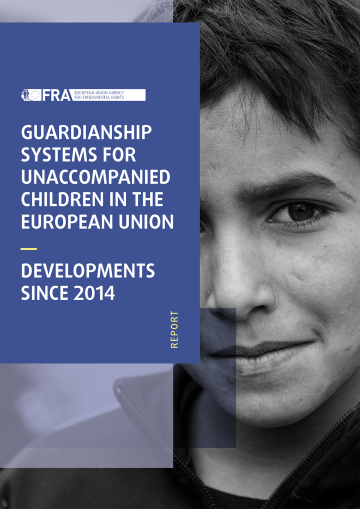
    In 2015 and 2016, the numbers of unaccompanied children arriving in Europe increased dramatically, straining national guardianship systems. This report looks at how EU Member States, as well as North Macedonia and Serbia, have adapted their guardianship systems for unaccompanied children since that time.
    If we are serious about protecting fundamental rights, we need to start listening to young people and what they have to tell us. This message came through very strongly at the Fundamental Rights Forum 2021. As we kick off the European Year of Youth 2022, let’s look at why listening to young people is key to protecting their rights.
    In this vlog, FRA Director Michael O’Flaherty highlights the important role young people have in creating solutions and addressing challenges in our societies. FRA will establish dialogues between policymakers and young people in 2022 so that we find a way forward together.
    The Coronavirus pandemic strongly affected young people. They are frequently blamed for spreading the virus. They also face widespread unemployment. In this vlog, FRA Director Michael O’Flaherty points to the need to address such challenges. On FRA’s side, young people, as human rights champions, will be at the heart of the debate at the Fundamental Rights Forum from 11 to 12 October.
    23
    September
    2020
    This report presents findings from FRA’s 2019 survey on Roma and Travellers in Belgium, France, Ireland, the Netherlands, Sweden and the United Kingdom. The survey included interviews with almost 4,700 Roma and Travellers, collecting information on more than 8,200 individuals living in their households.
    In his latest vlog, FRA Director Michael O’Flaherty speaks about the devastating effects of the Covid-19 pandemic on the Roma community. Roma children are in danger of losing almost a whole year of schooling. It’s like losing a generation. It’s robbing children of the one place where they can have hope and dream the same dreams of every other child.
    30
    June
    2020
    The Coronavirus pandemic continues to interrupt everyday life in the EU in unprecedented ways. But the way it affects our societies is shifting. As governments gradually lift some of the measures put in place to contain the spread of COVID-19, new fundamental rights concerns arise: how to ensure that the rights to life and health are upheld as daily life transitions to a ‘new normal’. This Bulletin looks at declarations of states of emergency, or equivalent, and how they came under scrutiny. It considers
    the impact on fundamental rights in important areas of daily life, and includes a thematic focus on the pandemic’s impact on older people.
    In this vlog Michael O’Flaherty outlines fundamental rights considerations when developing technological responses to public health, as he introduces the focus of FRA’s next COVID-19 bulletin.
    11
    May
    2020
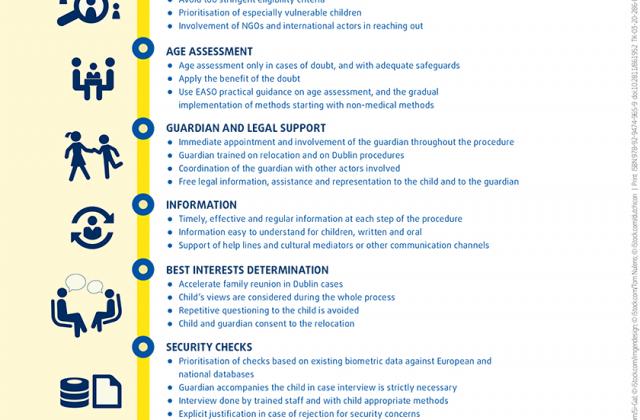
    In recent years, thousands of girls and boys have reached Europe without their parents, and sought international protection. Many of them experienced violence, abuse and neglect in their home countries, and while in transit. They have the right to be protected in line with the provisions of the UN Convention on the Rights of the Child, the European Convention on Human Rights, and European Union law. This report explores the challenges and good practices gathered in the implementation of such relocation programmes. Based on information FRA collected in 10 EU Member States, it aims to help national authorities to support the relocation of unaccompanied children by taking measures that are fully rights compliant and practically feasible.
    Based on the lessons learned from relocation
    experiences and on existing international and EU legal
    standards, FRA has developed a number of practical
    suggestions for the adjustment of relocation efforts to
    the protection needs of unaccompanied children. This
    guidance aims to be a practical tool for Member States
    that wish to engage in the relocation of unaccompanied
    children and in any future responsibility-sharing
    mechanisms, and to gain knowledge on how this can
    be done while respecting the child’s best interests.
    Primary theme
    Equality

    Equality, non-discrimination and racism

    Equality is a core value of the EU. You have the right to fair treatment regardless of who you are, what you believe, or how you chose to live.

    We carry out research and share expertise to help fight discrimination, inequality and racism in all its forms.

    Highlights

    • Report / Paper / Summary
      18
      November
      2021
      This report examines the EU’s main criminal law instrument in the field of counter-terrorism, Directive (EU) 2017/541. Specifically, it considers how the directive engages issues of fundamental rights, affecting individuals, groups and society as a whole.
    • Report / Paper / Summary
      11
      October
      2021
      This report proposes a framework for becoming, and functioning as, a ‘human rights city’ in the EU. It includes ‘foundations’, ‘structures’ and ‘tools’ for mayors, local administrations and grassroots organisations to reinforce fundamental rights locally. It is based on existing good practice and expert input by representatives of human rights cities in the EU, academic experts, international organisations and city networks.
    • Handbook / Guide / Manual
      22
      June
      2016
      Access to justice is an important element of the rule of law. It enables individuals to protect themselves against infringements of their rights, to remedy civil wrongs, to hold executive power accountable and to defend themselves in criminal proceedings. This handbook summarises the key European legal principles in the area of access to justice, focusing on civil and criminal law.
    • Page
      The Criminal Detention Database 2015-2022 combines in one place information on detention conditions in all 27 EU Member States as well as the United Kingdom.

    Highlights

    • Periodic updates / Series
      16
      June
      2021
      This Coronavirus Bulletin focuses on equitable access to vaccines. It outlines the situation in the 27 EU Member States from 1 March to 30 April 2021. The bulletin looks at two main areas: planning and prioritisation in deploying Covid-19 vaccinations and their rollout in the countries. It covers information and communication campaigns, as well as (pre)registration channels for and the administration of vaccinations.
    • Opinion / Position Paper
      30
      April
      2021
      This opinion illustrates the extent and nature of lived experiences of inequality and discrimination across the EU. It does so with reference to the grounds of discrimination and areas of life covered by the racial and employment equality directives, as well as in relation to the grounds and areas covered by the proposed Equal Treatment Directive.
    • Report / Paper / Summary
      28
      November
      2018
      Almost twenty years after adoption of EU laws forbidding discrimination, people of African descent in the EU face widespread and entrenched prejudice and exclusion. This report outlines selected results from FRA’s second large-scale EU-wide survey on migrants and minorities (EU-MIDIS II) carried out in 2016. It examines the experiences of almost 6,000 people of African descent in 12 EU Member States.
    • Report / Paper / Summary
      6
      December
      2017
      Seventeen years after adoption of EU laws that forbid discrimination, immigrants, descendants of immigrants, and minority ethnic groups continue to face widespread discrimination across the EU and in all areas of life – most often when seeking employment. For many, discrimination is a recurring experience. This is just one of the findings of FRA’s second European Union Minorities and Discrimination Survey (EU-MIDIS II), which collected information from over 25,500 respondents with different ethnic minority and immigrant backgrounds across all 28 EU Member States.
      Products
      3
      March
      2026
      Violence against women remains widespread in the European Union (EU). This joint report by the EU Agency for Fundamental Rights (FRA) and the European Institute for Gender Equality (EIGE) presents detailed findings from the EU gender-based violence survey. It offers in-depth analysis of the scale, nature and drivers of violence and exposes the structural gender inequality. Building on the 2024 publication, EU gender-based violence survey – Key results, and following up on FRA’s 2014 report, Violence against women: an EU-wide survey, this report tracks trends over the last decade across the EU. Eurostat, FRA, and EIGE jointly conducted the survey. It is based on over 100,000 interviews covering all 27 EU Member States.
      24
      February
      2026
      The start of Russia’s war of aggression against Ukraine on 24 February 2022 shocked the global community and gave rise to a
      series of urgent fundamental rights challenges across Europe. While much attention has focused on the scale of devastation and its wider impact on all Ukrainians, the war has also inflicted profound personal harm. This report sheds light on the violence, sexual harassment and exploitation experienced by women displaced from Ukraine. Drawing on a survey and in-depth interviews with women from Ukraine, the report documents the prevalence, forms and patterns of gender-based violence and sets out practical measures to improve safety, access to justice and support.
      27
      January
      2026
      This report looks at antisemitism in the EU, focusing on what can be done to address gaps in recording and inconsistencies in data collection. It highlights existing tools and guidance for Member States to improve their recording systems. The analysis is based on official administrative data and information from publicly available sources across EU Member States, as well as Albania, North Macedonia, and Serbia. Detailed country overviews are available for all countries covered. Antisemitism has been monitored by FRA since 2004. This report builds on the 2024 publication, ‘Jewish People’s Experiences and Perceptions of Antisemitism’.
      The Fundamental Rights Report 2025 provides a comprehensive overview of the state of fundamental rights in the European Union, highlighting major developments and trends in 2024. This video provides an insight into the issues covered by this year’s report.
      Our recent report looks at the breadth and depth of violence and neglect faced by people with disabilities living in institutions. It highlights the shortcomings by EU Member States in preventing violence and protecting those who are at a higher risk of experiencing it, in line with the UN Convention on the Rights of Persons with Disabilities. This video explains the key issues as well as the actions needed to ensure that a person’s need for care and support should never come at the expense of their safety and dignity.
      27
      November
      2025
      This report looks at the breadth and depth of violence and neglect faced by people with disabilities living in institutions. It highlights the shortcomings by EU Member States in preventing violence and protecting those who are at a higher risk of experiencing it, in line with the UN Convention on the Rights of Persons with Disabilities. Based on research across all EU Member States and FRA observer candidate countries, the report calls for better protection, stronger prevention of violence, and clear accountability. It urges the EU and its Member States to implement their obligations around equality and fundamental rights.
      13
      November
      2025
      FRA analysed 31 digital tools and systems across seven EU Member States, exploring potential positive and negative effects on victims, claimants and defendants. By identifying risks early, investing in skills and training, and embedding protections from the outset, policymakers and practitioners can build effective and inclusive justice systems. This report provides practical suggestions to help ensure that digitalised justice systems are accessible and deliver fair outcomes for all.
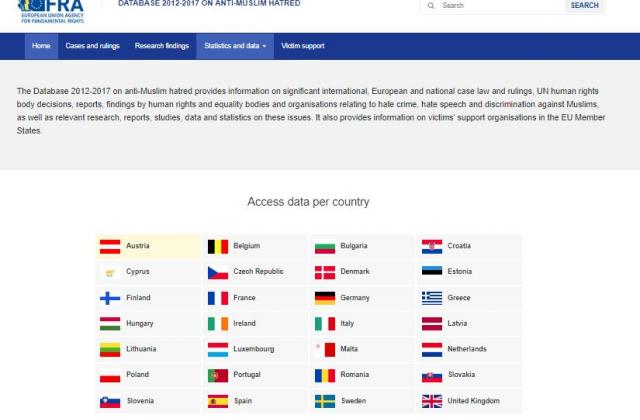
      The database provides up-to-date information on hate crime, incitement to violence and hatred, harassment, hate speech and discrimination against Muslims in the EU, Albania, North Macedonia and Serbia. Data for the United Kingdom exists up to 2019.
      30
      October
      2025
      This factsheet summarises key Court of Justice of the European Union (CJEU) and European Court of Human Rights (ECtHR) cases on reasonable accommodation for persons with disabilities. Building on Article 2 of the United Nations Convention on the Rights of Persons with Disabilities (UNCRPD), the courts address employment, physical accessibility, and education. In collaboration, the EU Agency for Fundamental Rights and the European Court of Human Rights produced this short publication. It is designed to aid lawyers and policymakers in understanding and applying the jurisprudence in this area.
      Roma and Travellers in the EU have more jobs and better housing than before, but poverty, discrimination and segregation remain widespread, shows a new survey from the EU Agency for Fundamental Rights (FRA).
      2
      October
      2025
      This report examines the fundamental rights and living conditions of Roma and Travellers across 10 EU Member States and
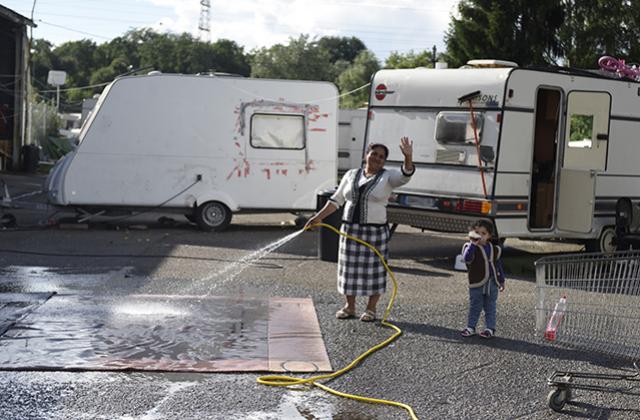
      3 accession countries. The survey evaluates progress towards the EU Roma strategic framework’s 2030 objectives, covering areas such as discrimination, poverty, education, employment, health, and housing.
      FRA’s 2024 survey on Roma and Travellers in Albania, Bulgaria, Czechia, France, Greece, Hungary, Ireland, Italy, North Macedonia, Portugal, Romania, Serbia and Spain collected information from 10,126 respondents living in private households who self-identify as Roma or Traveller, are 16 or older and have lived in the survey countries for at least the 12 months before the survey.
      Challenging prejudice and stereotypes is not easy. But everything changes when we choose to truly see people for who they are. We can look beyond someone’s disability or skin colour – and see a person with their own dreams and aspirations. We can choose to understand, not assume. To connect, not exclude. So, pause. Look again. What do you choose to see?
      17
      September
      2025
      This report highlights the discrimination, harassment, violence, and non-consensual medical interventions faced by intersex people across 30 European countries, based on responses from nearly 2,000 participants in FRA’s 2023 EU LGBTIQ Survey III. It reveals that many intersex individuals also identify as trans, non-binary, gender-diverse and have varied sexual orientations, which further compounds their experiences of discrimination. The report aims to support the development of laws and policies that promote the inclusion and dignity of intersex people.
      10
      June
      2025
      This publication is an excerpt from the Fundamental Rights Report 2025, the annual report of the European Union Agency for Fundamental Rights (FRA). It presents selected critical developments in fundamental rights in 2024, as well as the key findings and FRA opinions from the report’s chapters.
      10
      June
      2025
      The Fundamental Rights Report 2025 is the annual report of the European Union Agency for Fundamental Rights (FRA). It provides an overview of the state of fundamental rights in the EU and highlights selected critical developments and trends in 2024. The report covers issues such as inclusive elections, gender-based violence, and the implementation of the EU Charter of Fundamental Rights. It presents FRA’s opinions on these developments, setting out the actions that the EU and Member States should take. This annual publication is a valuable resource for those seeking to stay informed about the EU’s shifting landscape of fundamental rights.
      20
      March
      2025
      In recent years, the EU has taken steps to improve child protection, yet some Member States do not have an integrated approach. FRA first produced an overview of child protection systems in the EU in 2014, and an update in 2023. The data is published in FRA’s ‘Mapping of Child Protection Systems in the EU – Update 2023’. This report completements the 2023 update with comparative analysis and provides greater detail on children in vulnerable situations, care and the participation of children in matters affecting them. It also offers guidance on creating comprehensive frameworks that ensure that children’s rights are respected.
      30
      January
      2025
      This technical report presents in detail the stages of the survey implementation and the relevant information needed to assess the quality and reliability of the data.
      25
      November
      2024
      This report presents key results of the EU gender-based violence survey based on data from all 27 Member States. The report focuses on the overall prevalence of physical violence or threats and/or sexual violence by any perpetrator, violence perpetrated by women’s intimate partners and by other people (non-partners) and women’s experiences of sexual harassment at work.
      Summary
      The Handbook on European law relating to the rights of the child illustrates how relevant law and case law accommodate children’s interests and needs. Recognising children as full-fledged rights holders, it is a key reference on both EU and Council of Europe law.
      Published At
      2026-03-05T18:28:06
      Show in News list
      Yes
      Action buttons
      Archive
      No