English
Press release
1
Secondary theme
Environmental and social sustainability

EU Charter of Fundamental Rights
Highlights
-
 Report / Paper / Summary18November2021This report examines the EU’s main criminal law instrument in the field of counter-terrorism, Directive (EU) 2017/541. Specifically, it considers how the directive engages issues of fundamental rights, affecting individuals, groups and society as a whole.
 -
 Report / Paper / Summary11October2021This report proposes a framework for becoming, and functioning as, a ‘human rights city’ in the EU. It includes ‘foundations’, ‘structures’ and ‘tools’ for mayors, local administrations and grassroots organisations to reinforce fundamental rights locally. It is based on existing good practice and expert input by representatives of human rights cities in the EU, academic experts, international organisations and city networks.
 -
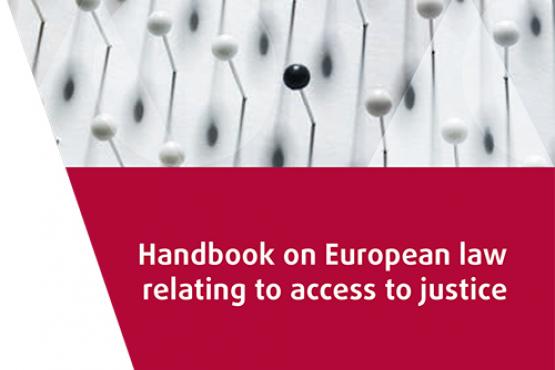 Handbook / Guide / Manual22June2016Access to justice is an important element of the rule of law. It enables individuals to protect themselves against infringements of their rights, to remedy civil wrongs, to hold executive power accountable and to defend themselves in criminal proceedings. This handbook summarises the key European legal principles in the area of access to justice, focusing on civil and criminal law.
 -
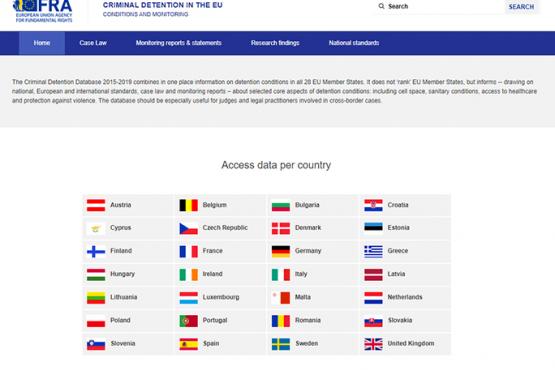 PageThe Criminal Detention Database 2015-2022 combines in one place information on detention conditions in all 27 EU Member States as well as the United Kingdom.
Products






Multimedia
News
Events
Primary theme
Just and green transition
EU Charter of Fundamental Rights
Highlights
-
Report / Paper / Summary18November2021This report examines the EU’s main criminal law instrument in the field of counter-terrorism, Directive (EU) 2017/541. Specifically, it considers how the directive engages issues of fundamental rights, affecting individuals, groups and society as a whole.
-
Report / Paper / Summary11October2021This report proposes a framework for becoming, and functioning as, a ‘human rights city’ in the EU. It includes ‘foundations’, ‘structures’ and ‘tools’ for mayors, local administrations and grassroots organisations to reinforce fundamental rights locally. It is based on existing good practice and expert input by representatives of human rights cities in the EU, academic experts, international organisations and city networks.
-
Handbook / Guide / Manual22June2016Access to justice is an important element of the rule of law. It enables individuals to protect themselves against infringements of their rights, to remedy civil wrongs, to hold executive power accountable and to defend themselves in criminal proceedings. This handbook summarises the key European legal principles in the area of access to justice, focusing on civil and criminal law.
-
PageThe Criminal Detention Database 2015-2022 combines in one place information on detention conditions in all 27 EU Member States as well as the United Kingdom.
Products
Multimedia
News
Events
Summary
The drive for energy-efficient housing is critical to meet the EU’s climate goals, but it currently risks leaving people behind. A new report from the EU Agency for Fundamental Rights (FRA) finds that low‑income households, older people and people with disabilities often face barriers when accessing renovation programmes. Tenants are also largely excluded from renovation schemes. Yet, they often live in the least energy-efficient housing and face higher rents or eviction when renovations take place. To address this, the report calls for adopting a human rights-based approach to the energy transition and housing energy policies.
Published At
2026-01-29T06:30:00
Show in News list
Yes
Image
Image

Cover_Housing_energy_transition-AdobeStock_257248327
Image copyright
AdobeStock@257248327
Archive
No