Meeting with Cypriot Commissioner for Administration and Human Rights

30 January 2026


English
Press release
0
Secondary theme
Asylum

Access to asylum

Highlights

  • Report / Paper / Summary
    18
    November
    2021
    This report examines the EU’s main criminal law instrument in the field of counter-terrorism, Directive (EU) 2017/541. Specifically, it considers how the directive engages issues of fundamental rights, affecting individuals, groups and society as a whole.
  • Report / Paper / Summary
    11
    October
    2021
    This report proposes a framework for becoming, and functioning as, a ‘human rights city’ in the EU. It includes ‘foundations’, ‘structures’ and ‘tools’ for mayors, local administrations and grassroots organisations to reinforce fundamental rights locally. It is based on existing good practice and expert input by representatives of human rights cities in the EU, academic experts, international organisations and city networks.
  • Handbook / Guide / Manual
    22
    June
    2016
    Access to justice is an important element of the rule of law. It enables individuals to protect themselves against infringements of their rights, to remedy civil wrongs, to hold executive power accountable and to defend themselves in criminal proceedings. This handbook summarises the key European legal principles in the area of access to justice, focusing on civil and criminal law.
  • Page
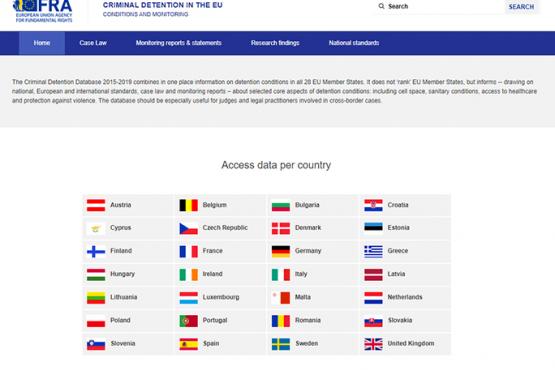
    The Criminal Detention Database 2015-2022 combines in one place information on detention conditions in all 27 EU Member States as well as the United Kingdom.

Highlights

  • Periodic updates / Series
    4
    March
    2022
    The EU Agency for Fundamental Rights has been regularly collecting data on asylum and migration since September 2015. This report focuses on the fundamental rights situation of people arriving in Member States and EU candidate countries particularly affected by migration. It addresses fundamental rights concerns between 1 October and 31 December 2021.
  • Country sheets
    20
    October
    2020
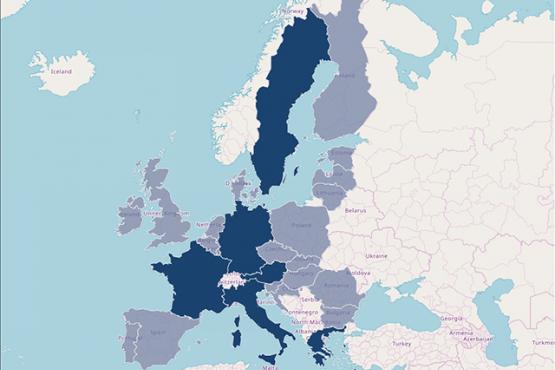
    The EU Fundamental Rights Agency published in 2019 its report on the ‘Integration of young refugees in the EU’. The report explored the challenges of young people who fled armed conflict or persecution and arrived in the EU in 2015 and 2016. The report is based on 426 interviews with experts working in the area of asylum and integration, as well as 163 interviews with young people, aged 16 to 24, conducted between October 2017 and June 2018 in 15 regions and cities located in six Member States: Austria, France, Germany, Greece, Italy and Sweden. The links on this page provide a summary of the information collected during this period for each country about unaccompanied children turning 18 and the change in people’s legal status once international protection is granted. These two issues had at the time been identified as moments requiring sufficient, consistent and systematic support, particularly from lawyers, social workers and guardians, to ensure successful integration.
  • Opinion / Position Paper
    11
    March
    2019
    In November 2016, FRA formulated 21 individual opinions to address the fundamental rights shortcomings identified in the implementation of the hotspot approach in Greece and Italy. Despite genuine efforts to improve the situation since November 2016, many of the suggestions contained in the 21 opinions FRA formulated at the time remain valid.
    Products

    23
    July
    2025
    This position paper examines how the EU can counter the instrumentalisation of migrants while also upholding fundamental rights. Instrumentalisation refers to countries outside the EU using migration to exert political pressure. This position paper defines the phenomenon, provides examples, and outlines legal obligations under EU law. It provides legal analysis and warns that some responses risk undermining fundamental rights at the EU’s external borders, including the right to asylum. To counter instrumentalisation and uphold fundamental rights, the position paper proposes practical measures for Member States to take, such as sanctions, border controls, and cooperation with private operators.
    12
    October
    2023
    This tool introduces newly appointed guardians to the concept of international protection, possible forms of protection recognised through the asylum procedure, the relevant legal framework and the related rights of the child. It is part of a series of four practical tools for guardians of unaccompanied children with international protection needs. The objective is to support guardians in their daily tasks and responsibilities during the asylum procedure, including the procedure under the Regulation (EU) No 604/2013 (Dublin III regulation) and temporary protection. The tools have been developed by the European Union Agency for Asylum (EUAA) and the European Union Agency for Fundamental Rights (FRA).
    12
    October
    2023
    This booklet aims to support guardians assigned to children in the asylum procedure. It includes an overview of the asylum procedure with a specific focus on children, the guarantees in the asylum procedure and your role as a guardian in the different phases of the asylum process. There is also a section on what to do if something unexpected may happen, or if the age of the applicant is disputed. It is part of a series of four practical tools for guardians of unaccompanied children with international protection needs. The objective is to support guardians in their daily tasks and responsibilities during the asylum procedure, including the procedure under the Regulation (EU) No 604/2013 (Dublin III regulation) and temporary protection. The tools have been developed by the European Union Agency for Asylum (EUAA) and the European Union Agency for Fundamental Rights (FRA).
    11
    October
    2023
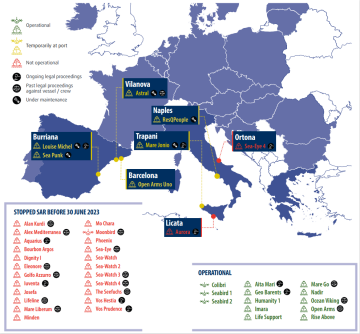
    Since October 2018, FRA has been publishing regular updates on NGO ships involved in search and rescue (SAR) operations in the Mediterranean, and the status of legal proceedings against them. This latest update covers until the end of June 2023.
    29
    September
    2023
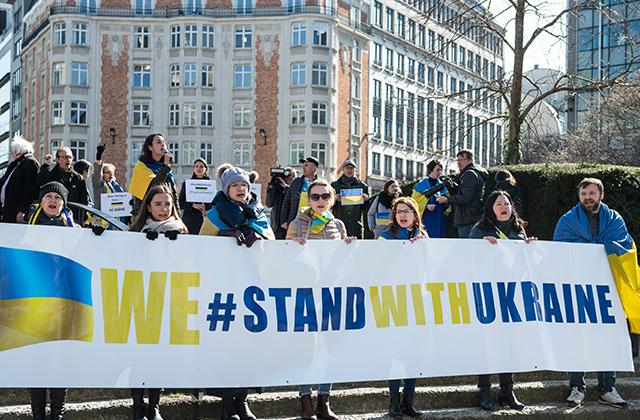
    Russia’s invasion of Ukraine posed new challenges for the EU. Millions were forced to flee the war. As a result of the scale of people’s displacement, the EU activated for the first time the Temporary Protection Directive (TPD). More than 1.3 million children sought international protection in the EU. This bulletin explores the respect, protection and fulfilment of the fundamental rights of displaced children and ways to safeguard their rights. The third in a series, this bulletin builds on the evidence in FRA’s Bulletin #1 and #2 on the experiences of displaced people seeking safety in the EU.
    30
    May
    2023
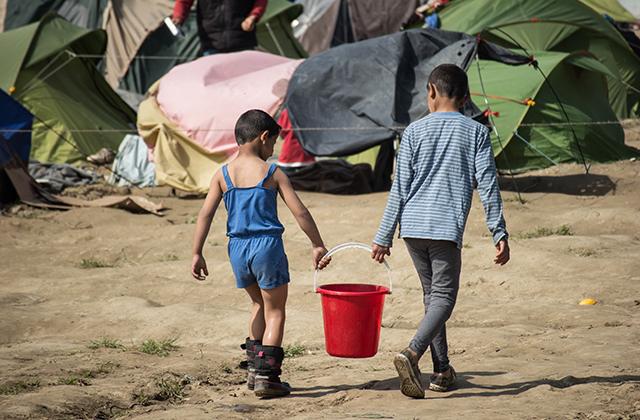
    Over the span of nearly eight years, there have been developments in showing respect for the human rights of those who arrive at the EU’s borders. Russia’s war of aggression against Ukraine has shown how a large and sudden influx of people can be managed effectively and respectfully. Notwithstanding the improvements, the growing number of people crossing or attempting to enter the EU pose a wide range of fundamental rights challenges.

    In this bulletin, FRA takes stock of concerns and improvements regarding the fundamental rights of migrants, asylum seekers and refugees. It highlights the EU Member States’ legal and practical responses. It identifies key trends, promising practices, long-standing and emerging patterns, and persistent concerns.

    28
    February
    2023
    12 new language versions available
    17 December 2024
    Russia’s military aggression against Ukraine triggered scenes not seen in Europe for decades. It has since caused death, immense destruction, and unspeakable suffering. It also set in motion a mass movement of people not seen since World War II. To protect them, the EU activated the Temporary Protection Directive for the first time. In doing so, all EU Member States must offer protection to those displaced from Ukraine.
    21
    October
    2022
    The Russian invasion of Ukraine triggered solidarity from EU governments, local authorities and society as they welcomed more than 7 million people fleeing the aggression. The European Union’s rapid response, activating the EU Temporary Protection Directive, offered welcome relief and much-needed support to those in need. It allowed displaced persons the opportunity to quickly settle and to work, travel and access services across the EU. But other pressing human rights issues have come to the fore and remain high on the EU’s agenda, such as human trafficking, sexual and gender-based violence, hate crime and hate-fuelled disinformation.
    19
    May
    2022
    This bulletin looks at the fundamental rights situation of all persons fleeing the Russian war in Ukraine to the four EU Member States neighbouring Ukraine. This is primarily in terms of the application of the EU Temporary Protection Directive. It is based on findings of FRA’s field mission to Hungary, Poland, Romania and Slovakia at the beginning of March 2022. It is also based on weekly country reports prepared by Franet, the contracted research network of FRA between 1 March and 27 April 2022.
    4
    March
    2022
    The EU Agency for Fundamental Rights has been regularly collecting data on asylum and migration since September 2015. This report focuses on the fundamental rights situation of people arriving in Member States and EU candidate countries particularly affected by migration. It addresses fundamental rights concerns between 1 October and 31 December 2021.
    17
    December
    2021
    The EU Agency for Fundamental Rights has been regularly collecting data on asylum and migration since September 2015. This report focuses on the fundamental rights situation of people arriving in Member States and EU candidate countries particularly affected by migration. It addresses fundamental rights concerns between 1 July and 30 September 2021.
    24
    September
    2021
    The EU Agency for Fundamental Rights has been regularly collecting data on asylum and migration since September 2015. This report focuses on the fundamental rights situation of people arriving in Member States and EU candidate countries particularly affected by migration. It addresses fundamental rights concerns between 1 January and 30 June 2021.
    25
    February
    2021
    The EU Agency for Fundamental Rights has been regularly collecting data on asylum and migration since September 2015. This report focuses on the fundamental rights situation of people arriving in Member States and EU candidate countries particularly affected by migration. It addresses fundamental rights concerns between 1 October and 31 December 2020.
    6
    November
    2020
    The EU Agency for Fundamental Rights has been regularly collecting data on asylum and migration since September 2015. This report focuses on the fundamental rights situation of people arriving in Member States and EU candidate countries particularly affected by migration. It addresses fundamental rights concerns between 1 July and 30 September 2020.
    20
    October
    2020
    The EU Fundamental Rights Agency published in 2019 its report on the ‘Integration of young refugees in the EU’. The report explored the challenges of young people who fled armed conflict or persecution and arrived in the EU in 2015 and 2016. The report is based on 426 interviews with experts working in the area of asylum and integration, as well as 163 interviews with young people, aged 16 to 24, conducted between October 2017 and June 2018 in 15 regions and cities located in six Member States: Austria, France, Germany, Greece, Italy and Sweden. The links on this page provide a summary of the information collected during this period for each country about unaccompanied children turning 18 and the change in people’s legal status once international protection is granted. These two issues had at the time been identified as moments requiring sufficient, consistent and systematic support, particularly from lawyers, social workers and guardians, to ensure successful integration.
    27
    July
    2020
    The EU Agency for Fundamental Rights has been regularly collecting data on asylum and migration since September 2015. This report focuses on the fundamental rights situation of people arriving in Member States and EU candidate countries particularly affected by migration. It addresses fundamental rights concerns between 1 April and 30 June 2020.
    27
    May
    2020
    The EU Agency for Fundamental Rights has been regularly collecting data on migration since September 2015. This report focuses on the fundamental rights situation of people arriving in Member States and EU candidate countries particularly affected by large migration movements. It addresses key fundamental rights concerns between 1 January and 31 March 2020.
    18
    February
    2020
    The EU Agency for Fundamental Rights has been regularly collecting data on migration since September 2015. This report focuses on the fundamental rights situation of people arriving in Member States and EU candidate countries particularly affected by large migration movements. It addresses key fundamental rights concerns between 1 October and 31 December 2019.
    19
    November
    2019
    Over 2.5 million people applied for international protection in the 28 EU Member States in 2015 and 2016. Many of those who were granted some form of protection are young people, who are likely to stay and settle in the EU. The EU Agency for Fundamental Rights interviewed some of them, as well as professionals working with them in 15 locations across six EU Member States: Austria, France, Germany, Greece, Italy and Sweden. This report presents the result of FRA’s fieldwork research, focusing on young people between the
    ages of 16 and 24.
    4
    November
    2019
    The EU Agency for Fundamental Rights has been regularly collecting data on asylum and
    migration since September 2015. This report focuses on the fundamental rights situation
    of people arriving in Member States and EU candidate countries particularly affected by
    migration. It addresses fundamental rights concerns between 1 July and 30 September 2019.
    Primary theme
    Asylum

    Asylum, migration and borders

    The increase in migration has presented opportunities and challenges across Europe. FRA encourages rights-compliant responses.

    We provide practical expertise on this complex issue. This includes regular updates, focus papers and toolkits. We also outline policy alternatives and best practices.

    Highlights

    • Report / Paper / Summary
      18
      November
      2021
      This report examines the EU’s main criminal law instrument in the field of counter-terrorism, Directive (EU) 2017/541. Specifically, it considers how the directive engages issues of fundamental rights, affecting individuals, groups and society as a whole.
    • Report / Paper / Summary
      11
      October
      2021
      This report proposes a framework for becoming, and functioning as, a ‘human rights city’ in the EU. It includes ‘foundations’, ‘structures’ and ‘tools’ for mayors, local administrations and grassroots organisations to reinforce fundamental rights locally. It is based on existing good practice and expert input by representatives of human rights cities in the EU, academic experts, international organisations and city networks.
    • Handbook / Guide / Manual
      22
      June
      2016
      Access to justice is an important element of the rule of law. It enables individuals to protect themselves against infringements of their rights, to remedy civil wrongs, to hold executive power accountable and to defend themselves in criminal proceedings. This handbook summarises the key European legal principles in the area of access to justice, focusing on civil and criminal law.
    • Page
      The Criminal Detention Database 2015-2022 combines in one place information on detention conditions in all 27 EU Member States as well as the United Kingdom.

    Highlights

    • Handbook / Guide / Manual
      17
      December
      2020
      The European Convention on Human Rights and European Union law provide an increasingly important framework for the protection of the rights of foreigners. European Union legislation relating to asylum, borders and immigration is developing fast. There is an impressive body of case law by the European Court of Human Rights relating in particular to Articles 3, 5, 8 and 13 of the ECHR. The Court of Justice of the European Union is increasingly asked to pronounce on the interpretation of European Union law provisions in this field. The third edition of this handbook, updated up to July 2020, presents this European Union legislation and the body of case law by the two European courts in an accessible way.
    • Report / Paper / Summary
      27
      March
      2020
      Council of Europe (CoE) and European Union (EU) Member States have an undeniable sovereign right to control the entry of non-nationals into their territory. While exercising border control, states have a duty to protect the fundamental rights of all people under their jurisdiction, regardless of their nationality and/or legal status. Under EU law, this includes providing access to asylum procedures.
    • Page
      ‘Hotspots’ are facilities set up at the EU’s external border in Greece and Italy for the initial reception, identification and registration of asylum seekers and other migrants coming to the EU by sea. They also serve to channel newly-arrived people into international protection, return or other procedures.
    • Handbook / Guide / Manual
      18
      February
      2013
      Based on its findings and research FRA provides practical guidance to support the implementation of fundamental rights in the EU Member States. This series contains practical guidance on: Initial-reception facilities at external borders; Apprehension of migrants in an irregular situation; Guidance on how to reduce the risk of refoulement in external border management when working in or together with third countries; Fundamental rights implications of the obligation to provide fingerprints for Eurodac; Twelve operational fundamental rights considerations for law enforcement when processing Passenger Name Record (PNR) data and Border controls and fundamental rights at external land borders.
      Products
      19
      December
      2025
      The EU Agency for Fundamental Rights (FRA) publishes annual updates on the forced return monitoring systems set up by EU Member States under Article 8(6) of the EU Return Directive (2008/115/EC). This project has been ongoing since 2014.
      The latest report covers the period until the end of 2024.
      The Fundamental Rights Report 2025 provides a comprehensive overview of the state of fundamental rights in the European Union, highlighting major developments and trends in 2024. This video provides an insight into the issues covered by this year’s report.
      10
      October
      2025
      Labour inspectors are essential for enforcing workers’ rights and for detecting and addressing labour exploitation. Together, the European Labour Authority (ELA) and the European Union Agency for Fundamental Rights (FRA) have developed a guide for workplace inspectors on how to detect labour exploitation. This guide is a practical tool for labour inspectors. It focuses on non-national workers in the EU who work in a country other than their own. Such workers are particularly vulnerable to labour exploitation. The guide is also accompanied by a leaflet that summarises the detailed information provided in this guide.
      8
      October
      2025
      The Entry/Exit System (EES), launching in 2025, will register non-EU nationals crossing the EU’s external borders. This FRA guidance supports managers overseeing the operation of the new system. It helps them to ensure compliance with EU fundamental rights. It outlines operational considerations: clear communication, dignified biometric data collection and data protection. It also addresses staff training needs. Based on fieldwork at 10 border crossing points in 6 Member States, the guidance will ensure rights are respected under the new system. A separate guidance publication for border guards accompanies this publication.
      8
      October
      2025
      The Entry/Exit System (EES), launching in 2025, will register non-EU nationals crossing the EU’s external borders. This FRA guidance helps border guards apply the new rules in line with EU fundamental rights. It offers practical tips on informing people, collecting biometric data and supporting people with specific needs. Based on fieldwork at 10 border crossing points in 6 Member States, the guidance will ensure rights are respected under the new system. A separate guidance publication for managers accompanies this publication.
      30
      July
      2025
      This publication looks at how EU countries investigate abuse and ill-treatment at their borders. While more incidents are now raised with judicial authorities, convictions remain rare. Covering incidents up to the end of 2024 – including serious cases and shipwrecks – it also highlights the role of Frontex and pending cases before the European Court of Human Rights. It builds on FRA’s 2024 Guidance on investigating alleged ill-treatment at borders which outlines ways to make investigations more effective.
      23
      July
      2025
      This position paper examines how the EU can counter the instrumentalisation of migrants while also upholding fundamental rights. Instrumentalisation refers to countries outside the EU using migration to exert political pressure. This position paper defines the phenomenon, provides examples, and outlines legal obligations under EU law. It provides legal analysis and warns that some responses risk undermining fundamental rights at the EU’s external borders, including the right to asylum. To counter instrumentalisation and uphold fundamental rights, the position paper proposes practical measures for Member States to take, such as sanctions, border controls, and cooperation with private operators.
      20
      June
      2025
      The EU Agency for Fundamental Rights regularly collects data on the operations of NGO vessels involved in search and rescue in the Mediterranean. This includes any legal proceedings against them, as well as any difficulties in disembarking migrants in safe ports. This paper provides an overview of criminal investigations and other legal proceedings initiated by European Union (EU) Member States against civil society organisations deploying search and rescue vessels and aircraft in the Mediterranean and/or against individual crew members. The latest update covers the period from 2018 up until 1 June 2025.
      10
      June
      2025
      This publication is an excerpt from the Fundamental Rights Report 2025, the annual report of the European Union Agency for Fundamental Rights (FRA). It presents selected critical developments in fundamental rights in 2024, as well as the key findings and FRA opinions from the report’s chapters.
      10
      June
      2025
      The Fundamental Rights Report 2025 is the annual report of the European Union Agency for Fundamental Rights (FRA). It provides an overview of the state of fundamental rights in the EU and highlights selected critical developments and trends in 2024. The report covers issues such as inclusive elections, gender-based violence, and the implementation of the EU Charter of Fundamental Rights. It presents FRA’s opinions on these developments, setting out the actions that the EU and Member States should take. This annual publication is a valuable resource for those seeking to stay informed about the EU’s shifting landscape of fundamental rights.
      6
      February
      2025
      This FRA Position Paper outlines the Agency’s position on the creation of ‘return hubs’ in non-EU countries for migrants who have been ordered to leave the EU. Considering the serious fundamental rights risks connected with running return hubs, this legal analysis presents the conditions that would have to be met for return hubs to respect fundamental rights and comply with EU law. These include setting up agreements with the host countries and creating independent human rights monitoring mechanisms. The position paper does not examine centres in third countries that process asylum applications.
      21
      November
      2024
      This manual is designed to be used by workplace inspection staff in the Member States. It is intended to empower them to enforce the protective standards in EU law that safeguard the rights of third-country workers, including seasonal workers, migrant workers with temporary permits and migrants in an irregular situation. Third-country workers are nationals who are not from a Member State or from Iceland, Liechtenstein, Norway or Switzerland.
      29
      October
      2024
      FRA publishes annual updates on the forced return monitoring systems that EU Member States have set up under Article 8 (6) of the EU’s Return Directive (2008/115/EC). This latest update covers the period until the end of 2023.
      19
      September
      2024
      This publication guides EU countries on setting up independent monitoring mechanisms to ensure fundamental rights are respected during screening and asylum border procedures. These processes at borders are for people arriving from non-EU countries. Monitoring mechanisms are meant to prevent rights violations, protect victims, and support investigations into any allegations of wrongdoing by public authorities. The guidance highlights the importance of transparency and accountability, which builds trust in public authorities. New EU regulations coming into effect in 2026 will require such monitoring systems to be in place. This updates the guidance published in 2022.
      30
      July
      2024
      Fundamental rights violations on the EU’s land and sea borders often go unreported. Investigations into these violations need to be more effective. This report gathers examples of alleged rights violations of migrants and refugees between 2020 and 2023. It sets out 10 steps to promote prompt and effective national investigations into incidents of ill-treatment at borders.
      1
      August
      2024
      Migrant workers are particularly at risk of labour exploitation. Workplace inspectors play a role in protecting non-EU workers’ rights. This report guides inspectors to identify abuse and protect migrant workers. In autumn 2024, FRA will publish a manual with extensive resources to support workplace inspectors.
      1
      July
      2024
      The EU Agency for Fundamental Rights regularly collects data on the operations of NGO vessels involved in search and rescue in the Mediterranean. This includes any legal proceedings against them, as well as any difficulties in disembarking migrants in safe ports. This paper provides an overview of criminal investigations and other legal proceedings initiated by European Union (EU) Member States against civil society organisations deploying search and rescue vessels and aircraft in the Mediterranean and/or against individual crew members. The latest update covers the period from 2018 up until the end of May 2024.
      5
      June
      2024
      FRA’s Fundamental Rights Report 2024 analyses the year’s developments in fundamental rights. It focuses on the most pressing fundamental rights concerns facing Europe in 2023: the cost-of-living crisis, rights concerns at the EU’s external borders and migration, and threats to democracy. Re-structured, this year’s new approach is a shorter and sharper analysis. It also presents FRA’s opinions on these developments, including a summary of the evidence supporting these opinions.
      5
      June
      2024
      The year 2023 brought both progress and setbacks in terms of fundamental rights protection. FRA’s Fundamental Rights Report 2023 reviews developments in the field, identifying both achievements and remaining areas of concern. This publication presents FRA’s opinions on the main developments in the thematic areas covered and a synopsis of the evidence supporting these opinions. In so doing, it provides a compact but informative overview of the main fundamental rights challenges confronting the EU and its Member States.
      17
      April
      2024
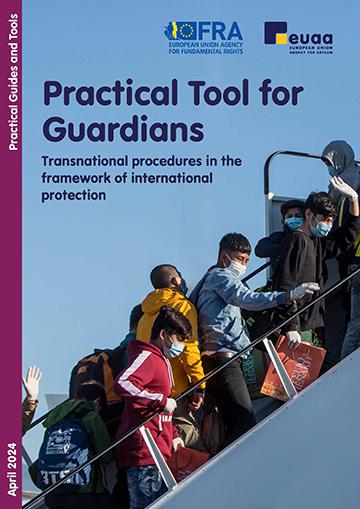
      This booklet is intended to support guardians assigned to children in the asylum procedure. It covers the technical aspects of the legal procedures related to the cross-border movement of such children. This booklet covers only procedures related to international protection. It is part of a series of four practical tools for guardians of unaccompanied children with international protection needs. The objective is to support guardians in their daily tasks and responsibilities during the asylum procedure, including the procedure under the Dublin III regulation and temporary protection. The tools have been developed by the European Union Agency for Asylum (EUAA) and FRA.
      Summary
      FRA met with the Ombudsman of Cyprus and her team on 20 January to discuss the status of the establishment of an independent mechanism to monitor fundamental rights under the Screening and Asylum Procedure Regulations.
      See also
      National Human Rights Institutions, Equality Bodies and Ombudsperson Institutions
      Published At
      2026-01-30T18:28:59
      Show in News list
      Yes
      Action buttons
      Archive
      No