English
Press release
0
Secondary theme
Roma

EU Charter of Fundamental Rights
Highlights
-
 Report / Paper / Summary18November2021This report examines the EU’s main criminal law instrument in the field of counter-terrorism, Directive (EU) 2017/541. Specifically, it considers how the directive engages issues of fundamental rights, affecting individuals, groups and society as a whole.
 -
 Report / Paper / Summary11October2021This report proposes a framework for becoming, and functioning as, a ‘human rights city’ in the EU. It includes ‘foundations’, ‘structures’ and ‘tools’ for mayors, local administrations and grassroots organisations to reinforce fundamental rights locally. It is based on existing good practice and expert input by representatives of human rights cities in the EU, academic experts, international organisations and city networks.
 -
 Handbook / Guide / Manual22June2016Access to justice is an important element of the rule of law. It enables individuals to protect themselves against infringements of their rights, to remedy civil wrongs, to hold executive power accountable and to defend themselves in criminal proceedings. This handbook summarises the key European legal principles in the area of access to justice, focusing on civil and criminal law.
 -
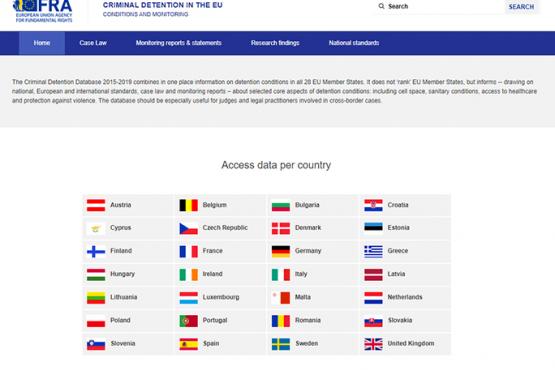 PageThe Criminal Detention Database 2015-2022 combines in one place information on detention conditions in all 27 EU Member States as well as the United Kingdom.
Highlights
-
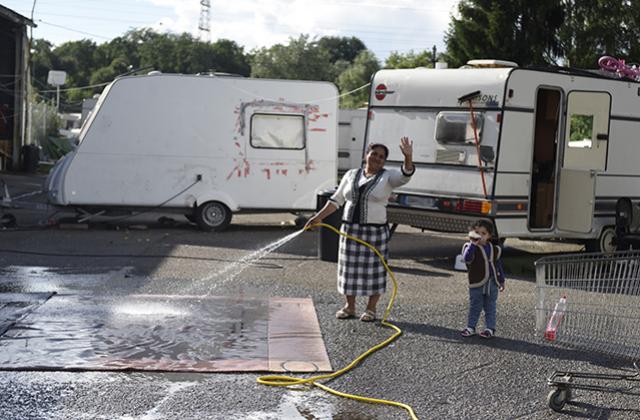 Report / Paper / Summary23September2020This report presents findings from FRA’s 2019 survey on Roma and Travellers in Belgium, France, Ireland, the Netherlands, Sweden and the United Kingdom. The survey included interviews with almost 4,700 Roma and Travellers, collecting information on more than 8,200 individuals living in their households.
 -
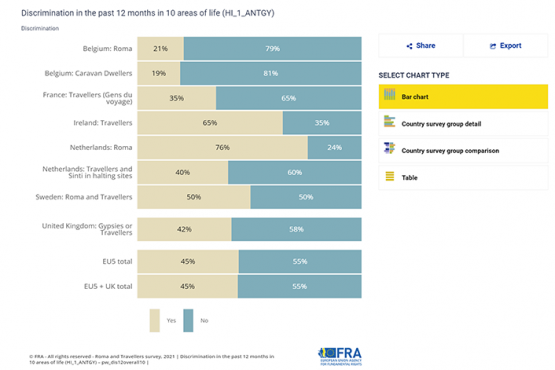 Data explorer24 January 2022FRA’s 2019 survey on Roma and Travellers in Belgium, France, Ireland, the Netherlands, Sweden and the United Kingdom interviewed almost 4 700 Roma and Travellers, collecting information on more than 8 200 individuals living in their households.
 -
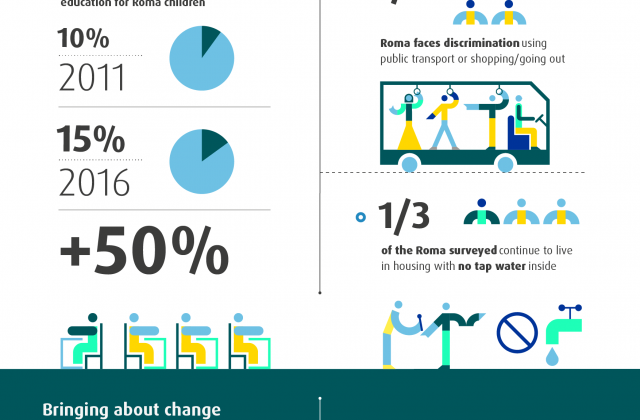
 Report / Paper / Summary29November2016Some 80% of Roma surveyed live below their country’s at-risk-of-poverty threshold; every third Roma lives in housing without tap water; every third Roma child lives in a household where someone went to bed hungry at least once in the previous month; and 50% of Roma between the ages of six and 24 do not attend school. This EU-MIDIS II report underscores an unsettling but unavoidable reality: the European Union’s largest ethnic minority continues to face intolerable discrimination and unequal access to vital services.
 -
 Report / Paper / Summary16November2018This report presents the main insights gained during the EU Fundamental Rights Agency’s project on local engagement for Roma inclusion, which explores how to best involve Roma in integration efforts at the local level. Bringing together local authorities and residents, especially Roma, it investigated what aspects work, which ones do not, and why this is the case.
Products





Multimedia
News
Events
National human rights systems and bodies
EU Charter of Fundamental Rights
Highlights
-
Report / Paper / Summary18November2021This report examines the EU’s main criminal law instrument in the field of counter-terrorism, Directive (EU) 2017/541. Specifically, it considers how the directive engages issues of fundamental rights, affecting individuals, groups and society as a whole.
-
Report / Paper / Summary11October2021This report proposes a framework for becoming, and functioning as, a ‘human rights city’ in the EU. It includes ‘foundations’, ‘structures’ and ‘tools’ for mayors, local administrations and grassroots organisations to reinforce fundamental rights locally. It is based on existing good practice and expert input by representatives of human rights cities in the EU, academic experts, international organisations and city networks.
-
Handbook / Guide / Manual22June2016Access to justice is an important element of the rule of law. It enables individuals to protect themselves against infringements of their rights, to remedy civil wrongs, to hold executive power accountable and to defend themselves in criminal proceedings. This handbook summarises the key European legal principles in the area of access to justice, focusing on civil and criminal law.
-
PageThe Criminal Detention Database 2015-2022 combines in one place information on detention conditions in all 27 EU Member States as well as the United Kingdom.
Highlights
-
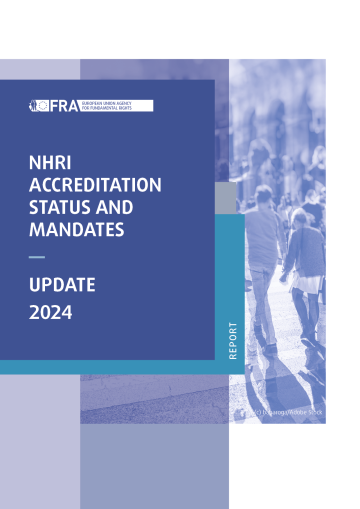
 Periodic updates / Series28September2021Since September 2020, three National Human Rights Institutions (NHRIs) had a change in their accreditation status, two new institutions were created and nine have had a change in tasks covered by their mandates. Following up on the September 2020 report “Strong and effective national human rights institutions – challenges, promising practices and opportunities”, this update provides an overview of developments in the accreditation status and mandates of NHRIS in the past 12 months. The update covers the 27 EU Member States as well as three additional states within FRA’s mandate (Albania, North Macedonia and Serbia).
 -
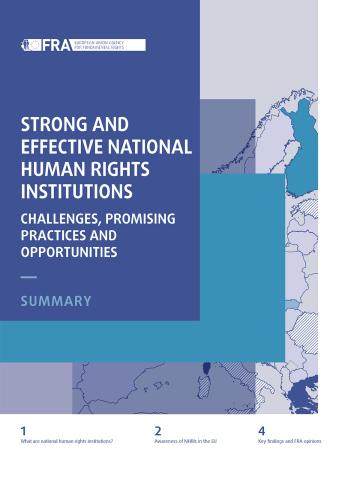
 Report / Paper / Summary3September2020National Human Rights Institutions (NHRIs) are a vital part of the country-level human rights protection system. This report, published 10 years after FRA’s first in-depth study on NHRIs, looks at such bodies in the EU, as well as the Republic of North Macedonia, the Republic of Serbia, and the United Kingdom of Great Britain and Northern Ireland. It explores relevant developments, challenges to their effectiveness and ways to maximise their impact.
 -
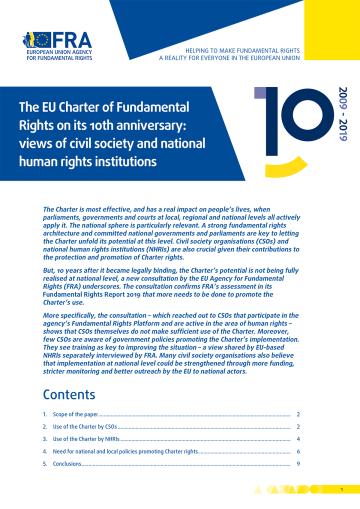
 Report / Paper / Summary12November2019The Charter is most effective, and has a real impact on people’s lives, when parliaments, governments and courts at local, regional and national levels all actively apply it. The national sphere is particularly relevant. A strong fundamental rights architecture and committed national governments and parliaments are key to letting the Charter unfold its potential at this level. Civil society organisations (CSOs) and national human rights institutions (NHRIs) are also crucial given their contributions to the protection and promotion of Charter rights.
 -
 VideoFRA Director Michael O’Flaherty focuses on ways to push back against challenges to our human rights system.
Products




Multimedia
News
Events
Civil society
EU Charter of Fundamental Rights
Highlights
-
Report / Paper / Summary18November2021This report examines the EU’s main criminal law instrument in the field of counter-terrorism, Directive (EU) 2017/541. Specifically, it considers how the directive engages issues of fundamental rights, affecting individuals, groups and society as a whole.
-
Report / Paper / Summary11October2021This report proposes a framework for becoming, and functioning as, a ‘human rights city’ in the EU. It includes ‘foundations’, ‘structures’ and ‘tools’ for mayors, local administrations and grassroots organisations to reinforce fundamental rights locally. It is based on existing good practice and expert input by representatives of human rights cities in the EU, academic experts, international organisations and city networks.
-
Handbook / Guide / Manual22June2016Access to justice is an important element of the rule of law. It enables individuals to protect themselves against infringements of their rights, to remedy civil wrongs, to hold executive power accountable and to defend themselves in criminal proceedings. This handbook summarises the key European legal principles in the area of access to justice, focusing on civil and criminal law.
-
PageThe Criminal Detention Database 2015-2022 combines in one place information on detention conditions in all 27 EU Member States as well as the United Kingdom.
Highlights
-
 Report / Paper / Summary18January2018Civil society organisations in the European Union play a crucial role in promoting fundamental rights, but it has become harder for them to do so – due to both legal and practical restrictions. This report looks at the different types and patterns of challenges faced by civil society organisations working on human rights in the EU.
 -
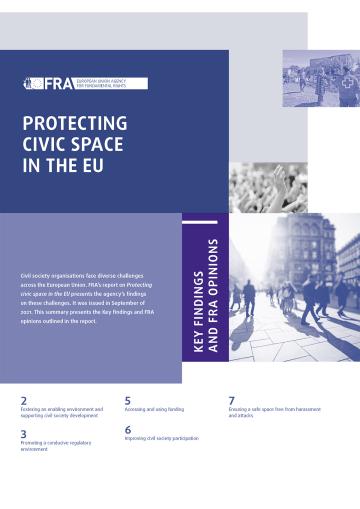
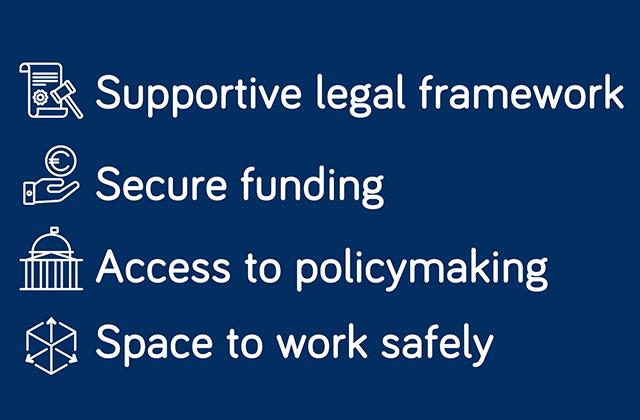
 Report / Paper / Summary22September2021Civil society organisations play a vital role in promoting fundamental rights, but they face diverse challenges across the European Union. This report presents FRA’s findings on a range of such challenges. The findings are based on research, and on two online consultations with civil society organisations, carried out in 2020.
 -
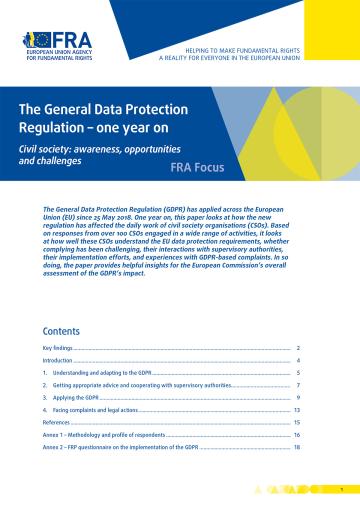
 PageThe Fundamental Rights Platform (FRP) is FRA’s channel for cooperation and information exchange with civil society organisations working on fundamental rights in the EU.
 -
 Report / Paper / Summary26November2018Civil society organisations play a critical role in democracies, and the importance of their work is widely recognised in international legal and policy documents. However, they face many obstacles when it comes to their day-to-day work. Based on the results of an online consultation with FRA’s civil society network, the Fundamental Rights Platform (FRP), in September 2018, this paper complements the January 2018 report.
Products








Multimedia
News
Events
Primary theme
Support for human rights systems and defenders
Many organisations work to defend your rights. We help their efforts with independent evidence, advice and expertise.
We support their frontline work. And we shine a light on potential risks and priority areas. Together we make your rights a reality.
EU Charter of Fundamental Rights
Highlights
-
Report / Paper / Summary18November2021This report examines the EU’s main criminal law instrument in the field of counter-terrorism, Directive (EU) 2017/541. Specifically, it considers how the directive engages issues of fundamental rights, affecting individuals, groups and society as a whole.
-
Report / Paper / Summary11October2021This report proposes a framework for becoming, and functioning as, a ‘human rights city’ in the EU. It includes ‘foundations’, ‘structures’ and ‘tools’ for mayors, local administrations and grassroots organisations to reinforce fundamental rights locally. It is based on existing good practice and expert input by representatives of human rights cities in the EU, academic experts, international organisations and city networks.
-
Handbook / Guide / Manual22June2016Access to justice is an important element of the rule of law. It enables individuals to protect themselves against infringements of their rights, to remedy civil wrongs, to hold executive power accountable and to defend themselves in criminal proceedings. This handbook summarises the key European legal principles in the area of access to justice, focusing on civil and criminal law.
-
PageThe Criminal Detention Database 2015-2022 combines in one place information on detention conditions in all 27 EU Member States as well as the United Kingdom.
Highlights
-
Report / Paper / Summary11October2021This report proposes a framework for becoming, and functioning as, a ‘human rights city’ in the EU. It includes ‘foundations’, ‘structures’ and ‘tools’ for mayors, local administrations and grassroots organisations to reinforce fundamental rights locally. It is based on existing good practice and expert input by representatives of human rights cities in the EU, academic experts, international organisations and city networks.
-
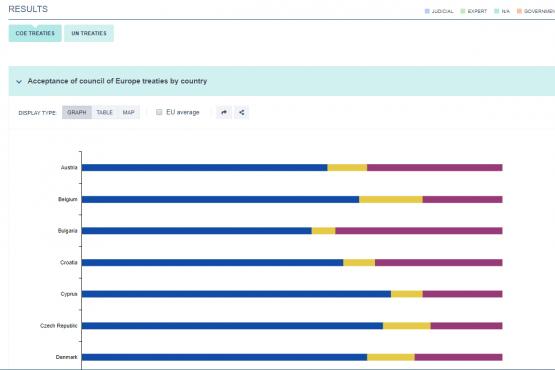 PageThe European Union Fundamental Rights Information System EFRIS is a Human Rights Gateway, bringing together data and information from existing human rights databases, and enables viewing and analysis of relevant assessments of fundamental rights in the EU.
 -
 Handbook / Guide / Manual23October2018As a very modern human rights catalogue containing many rights not found in established bills of rights, the Charter indeed looks good on paper. Those familiar with the main principles of EU law can usually quickly recite that the Charter is always binding on the EU, and binding on Member States only when they are “implementing EU law”. But what does this often-quoted language from Article 51 of the Charter actually mean?
Products







Multimedia
News
Events
Summary
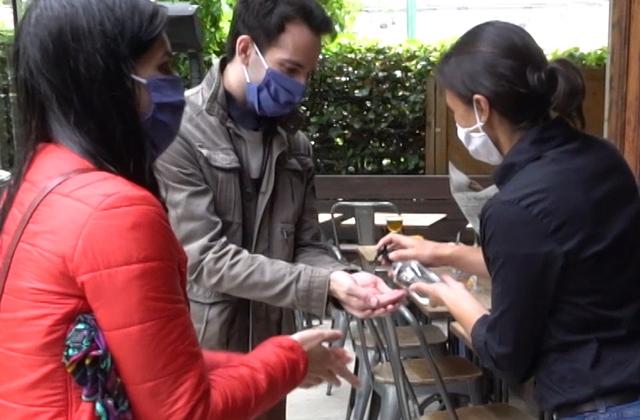
In January FRA attended several meetings for the EEA/Norway Grants Local Development Programme in Bulgaria and Roma Inclusion and Empowerment Programme in Czechia, organised by the respective Programme Operators.
See also
The EEA Grants and Norway Grants
Published At
2026-02-05T12:08:40
Show in News list
Yes
Archive
No